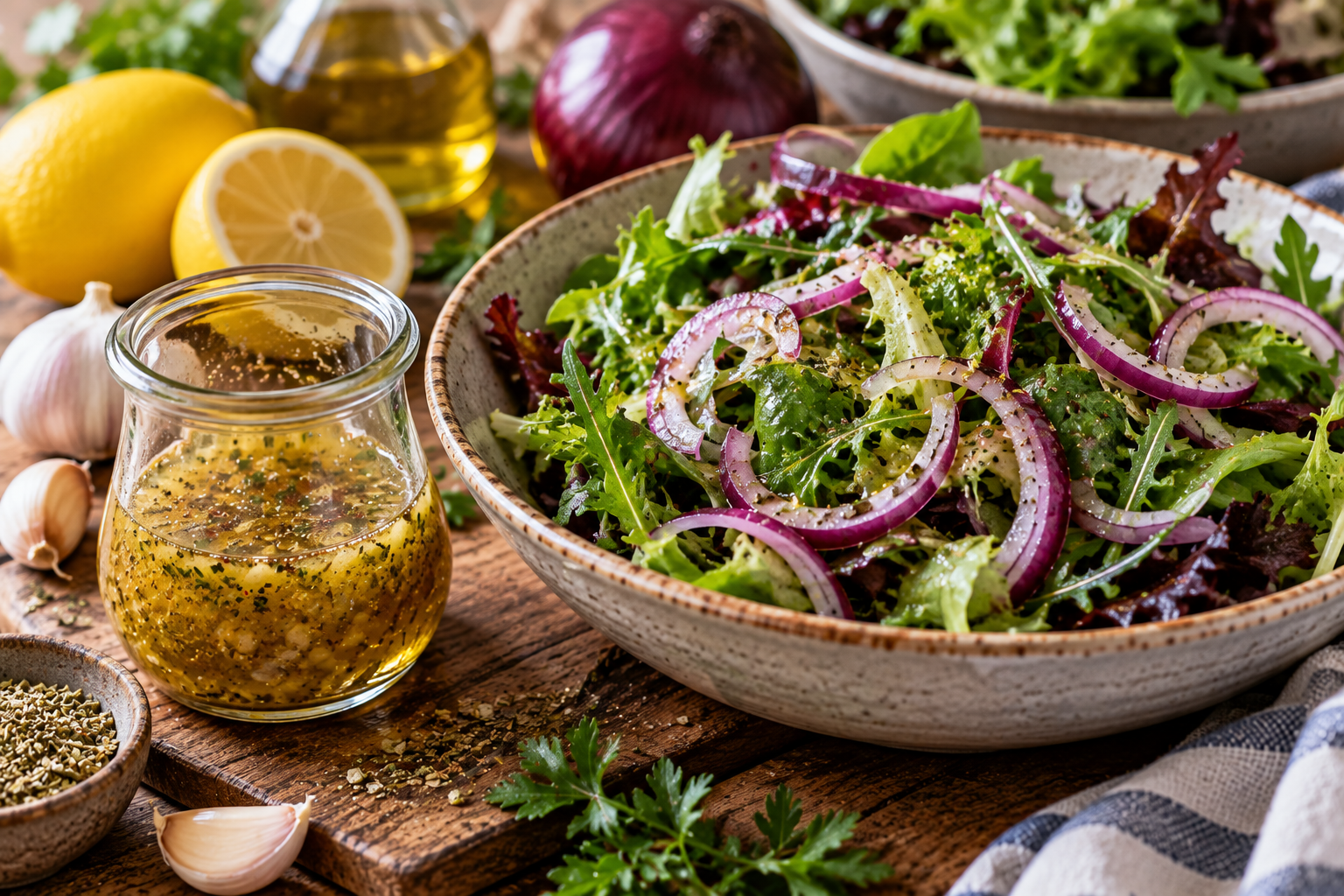
I made this dressing to go with my Mediterranean Garlic & Paprika Prawns and wanted something fresh enough to balance the smoky paprika, garlic and olive oil without adding another heavy flavour to the plate.
It’s about as simple as a dressing gets: lemon, extra virgin olive oil, oregano, garlic and black pepper. There’s no added sweetness because I actually want the acidity from the lemon to come through, especially with mixed leaves and thinly sliced red onion.
It’s a good basic Mediterranean-style dressing to keep around whenever a salad needs a little acidity and flavour without becoming the main event.
This one started with the idea of making tapas on a Monday night. Instead of cooking one main dish, I wanted a table full of smaller plates that we could put in the middle and slowly work our way through.
The individual dishes aren’t particularly difficult. The challenge, and part of the fun, is making several different things and getting them onto the table at roughly the same time.
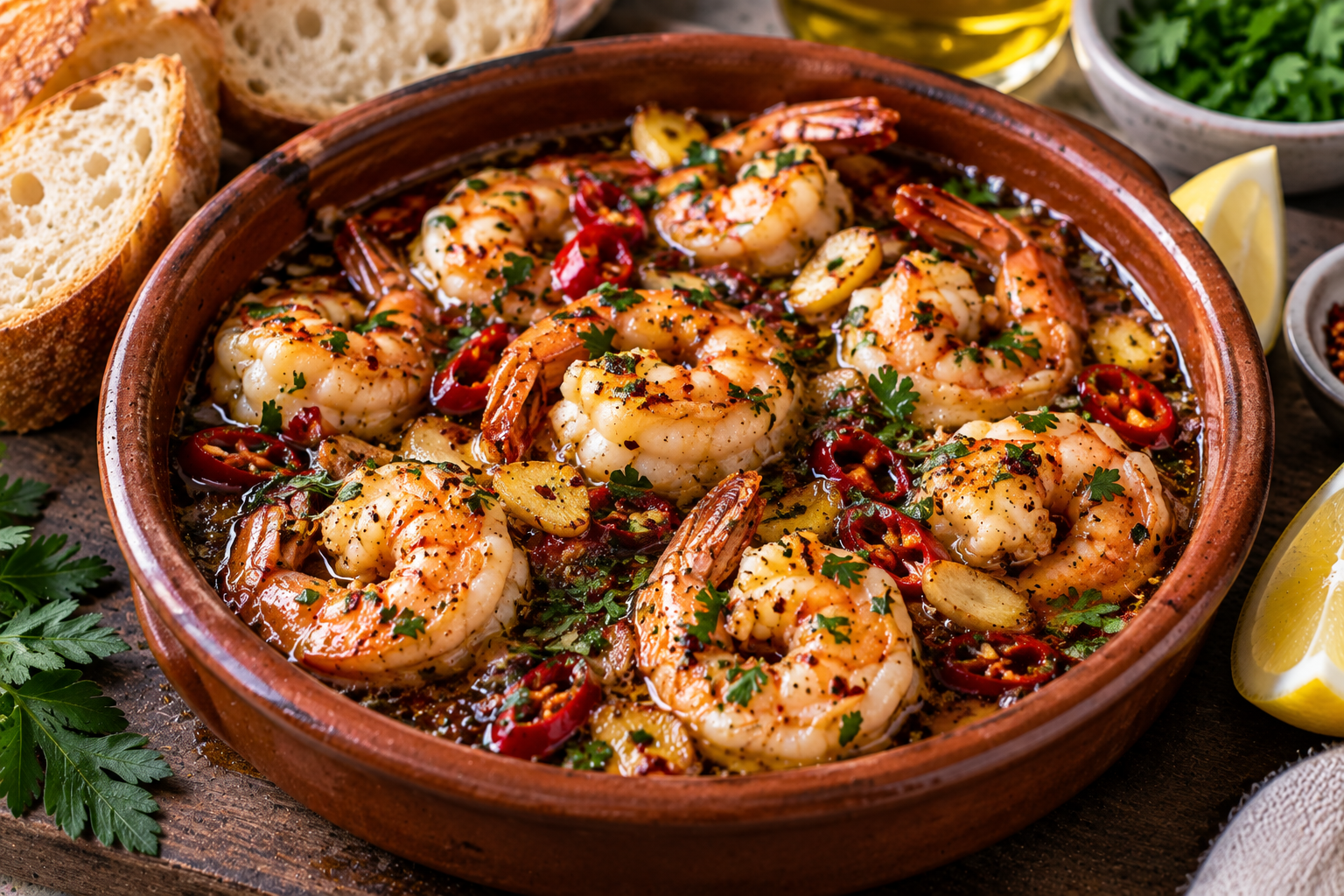
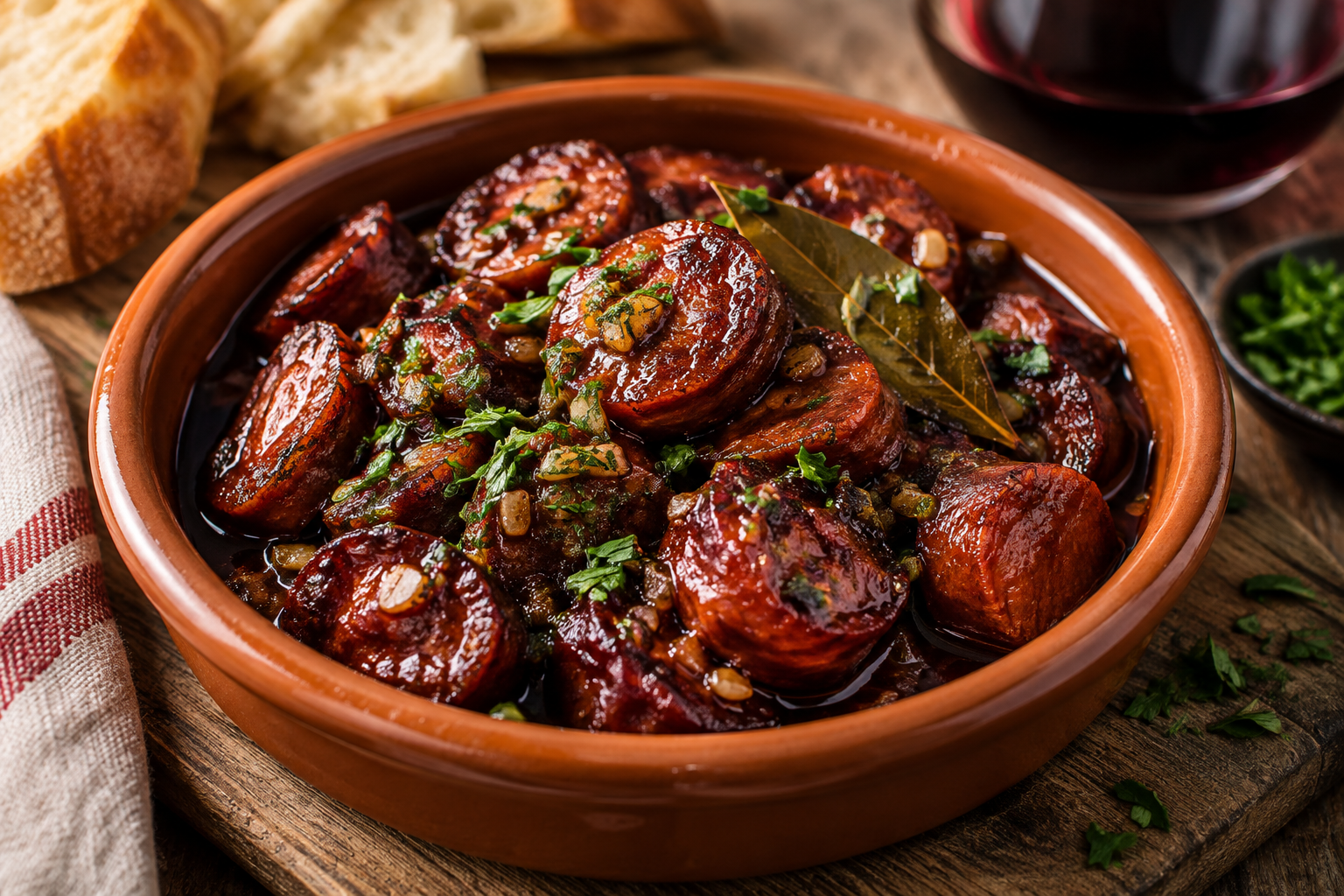
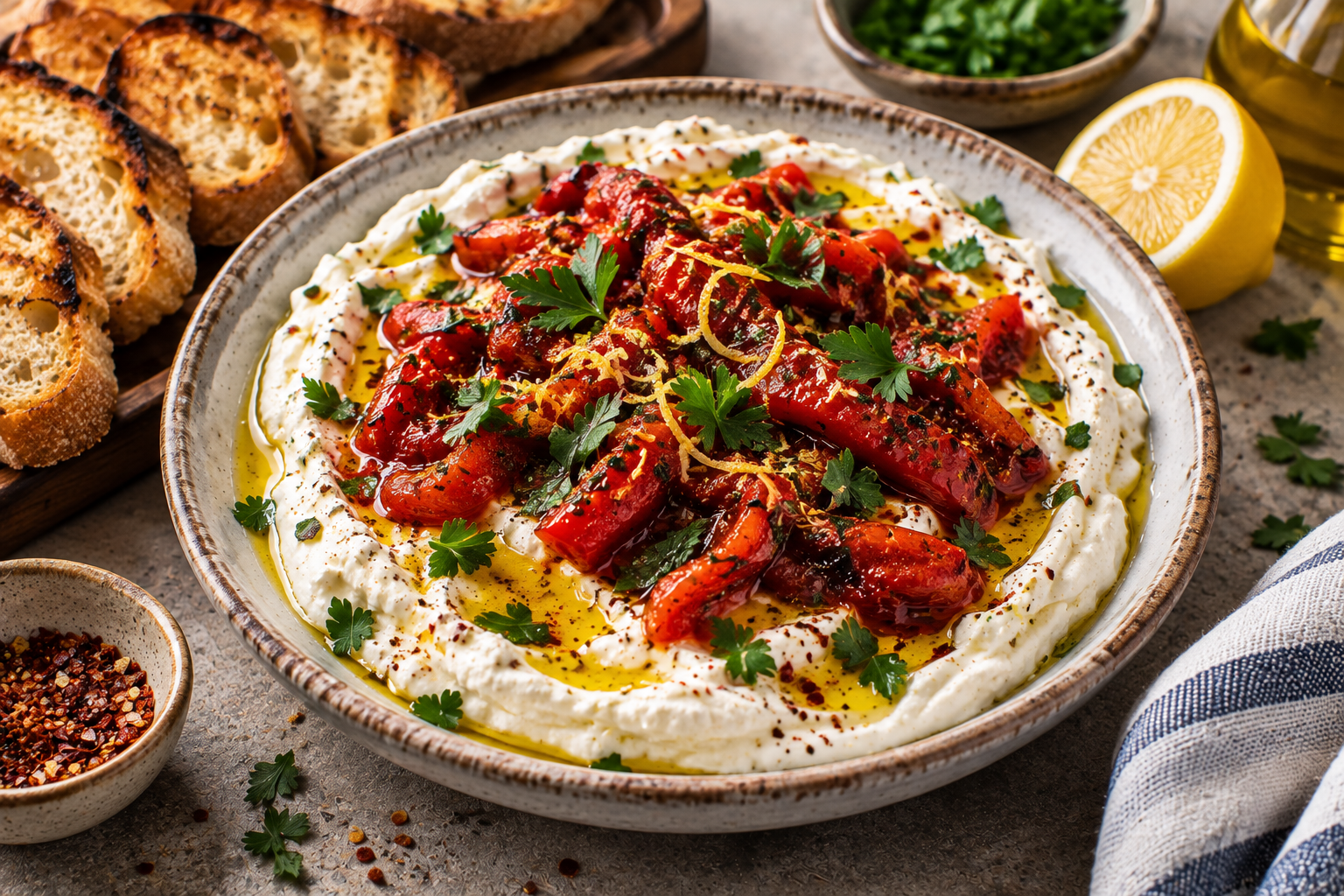
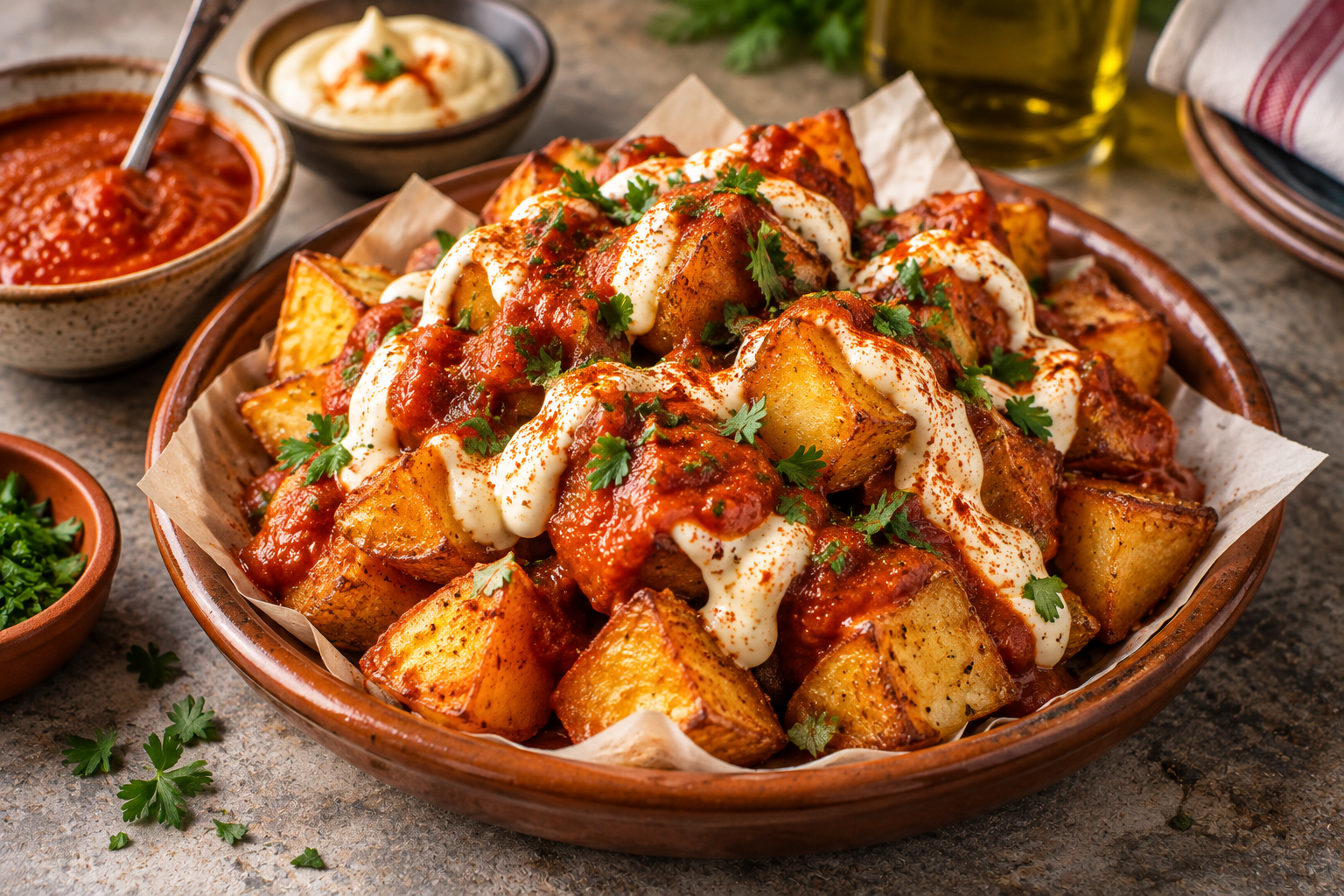
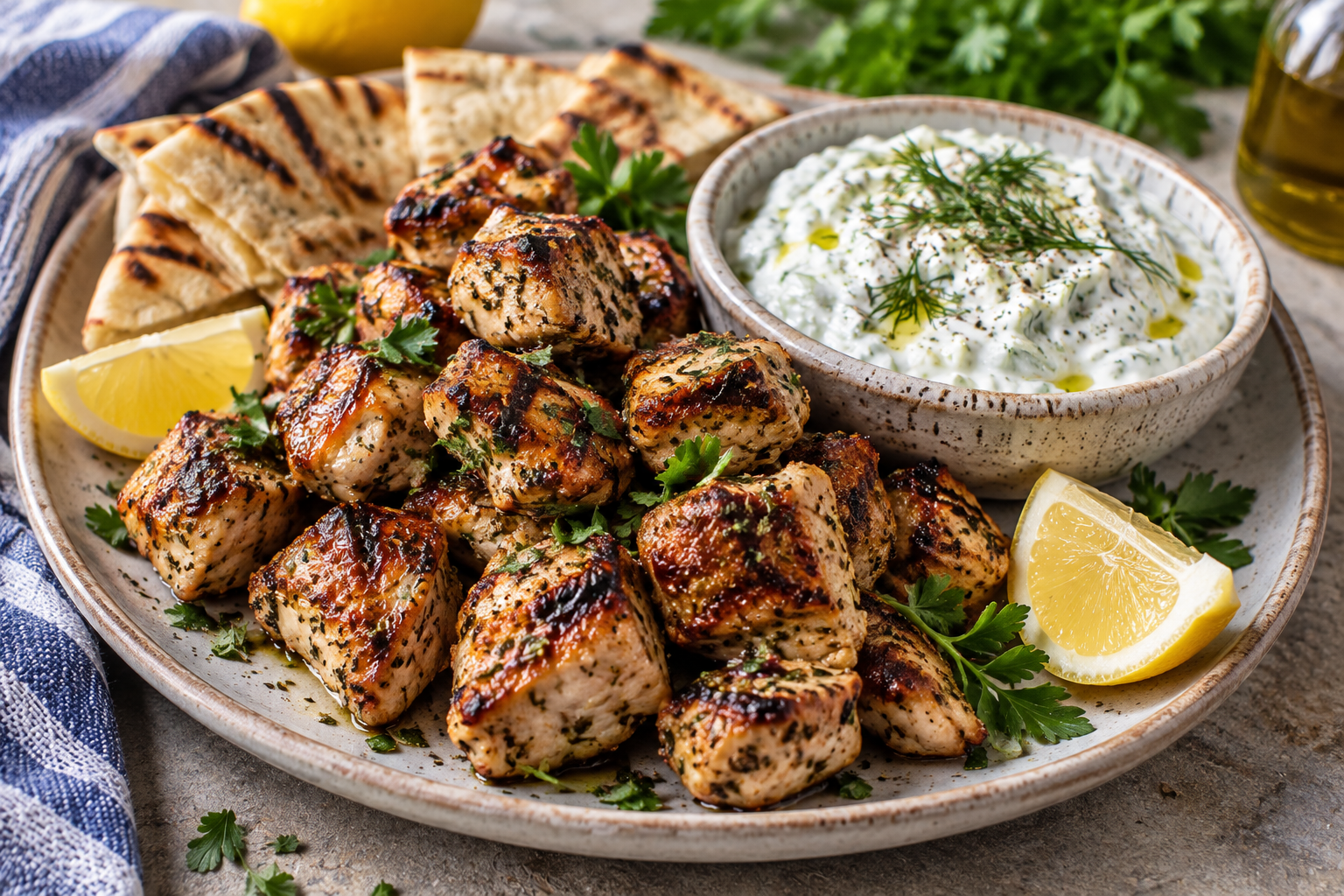
For this menu I’ve gone with Gambas al Ajillo, Chorizo in Red Wine, Whipped Feta with Roasted Capsicum & Herbs, Patatas Bravas, and Greek Chicken Souvlaki Bites with Tzatziki. There’s a good mix of crispy, creamy, spicy, garlicky and fresh, with enough variety that every plate brings something different.
It’s more cooking than I’d normally do for a Monday night, but that’s really the point. Sometimes it’s nice to make an ordinary night feel like an occasion.
Five dishes, everything in the middle of the table, and no real main course.
1
Gambas al Ajillo – Garlic Prawns
Gambas al Ajillo is a classic Spanish tapas dish built from remarkably few ingredients: prawns, olive oil, garlic and chilli.
The trick is controlling the heat. The garlic needs enough time to flavour the olive oil and become lightly golden without burning, while the prawns need only a very short cook so they stay juicy.
Lemongrass is one of those ingredients I associate immediately with Vietnamese cooking.
It’s fresh, citrusy and incredibly aromatic, but it doesn’t taste quite like lemon. It has its own herbal, slightly floral character that works particularly well with chicken, pork, seafood, chilli, garlic and fish sauce.
For a long time, I didn’t think too deeply about it. If I was making lemongrass chicken, I added lemongrass.
But there’s actually quite a difference between fresh lemongrass, frozen minced lemongrass and lemongrass paste, particularly when you’re deciding how much to use.
And there’s another practical reason this ingredient deserves its own Creacipes page:
I often use lemongrass paste.
Not because I think it’s necessarily better than fresh lemongrass. It’s because it’s convenient, consistent and something I can keep around for whenever I want it.
Creacipes is about how I actually cook, so if the recipe was made with paste, that’s what I’ll tell you.
If You Don’t Have the Lemongrass I Used
Fresh lemongrass and lemongrass paste aren’t perfectly interchangeable.
The strength of pastes can also vary considerably between brands, particularly when they contain oil, water, sugar, salt or other ingredients.
So I treat these as starting points rather than exact conversions.
If my recipe uses
I’d try
What to expect
Lemongrass paste
Finely minced fresh lemongrass
Fresher, potentially more aromatic
Fresh lemongrass
Lemongrass paste
Convenient, but flavour can be slightly different
Frozen minced lemongrass
Fresh minced lemongrass
Usually a very useful substitute
Fresh stalks in soup
Frozen stalks or pieces
Works well when the lemongrass is being infused
No lemongrass
Lemon/lime zest in some dishes
Adds citrus aroma, but it won’t taste like lemongrass
That last distinction is important.
Lemongrass isn’t lemon.
Adding lemon juice might give you acidity, but lemongrass itself isn’t primarily there to make food sour.
If I had to improvise, I’d be more inclined to experiment with a little lime or lemon zest for aroma rather than pouring lemon juice into a recipe and expecting the same result.
What Does Lemongrass Actually Taste Like?
Describing lemongrass as “lemony” is technically useful but doesn’t tell the whole story.
I find it:
citrusy + herbal + floral + fresh
without the sharp acidity you’d get from squeezing a lemon or lime.
That’s an important difference.
Lime juice can change the acidity of an entire marinade.
Lemongrass can make that marinade smell citrusy without doing the same thing to its acid balance.
That’s why you’ll sometimes find lemongrass and lime in the same recipe.
They’re doing different jobs.
Fresh Lemongrass
Fresh lemongrass is probably the version most people picture.
The stalk has tough green outer layers and a more tender, aromatic lower section.
For marinades and stir-fries, I’m mainly interested in the softer lower part.
I’ll remove particularly tough outer layers, trim it and mince the usable portion very finely.
And I mean very finely.
Large pieces of lemongrass can be fibrous and unpleasant to chew.
If I’m putting it directly into something I’m going to eat, I want it finely minced, pounded or processed.
Lemongrass in Soups Is Different
If I’m making something like a broth or soup, I don’t necessarily need to mince the lemongrass.
I can bruise a stalk and let it infuse the liquid.
That’s a completely different use.
The broth extracts the aromatic compounds while the tough stalk can be removed later.
So when a recipe tells you to:
bruise the lemongrass
rather than:
finely mince the lemongrass
there’s usually a reason.
One is being used almost like an aromatic tea bag.
The other is becoming part of the food.
Lemongrass Paste
This is the version you’ll see quite often in my recipes.
I’ve used supermarket lemongrass paste simply because it’s extremely convenient.
There’s no trimming.
There’s no finely chopping a fibrous stalk.
And there’s no discovering that the lemongrass I bought two weeks ago has become something I’d rather not put in dinner.
I squeeze or spoon out what I need and put the rest back in the fridge.
For everyday cooking, that’s valuable to me.
It works particularly well in things like:
marinades, grilled chicken, pork, sauces and meal prep.
But there is a trade-off.
Freshly cut lemongrass can have a brighter and more complex aroma.
And different commercial pastes aren’t necessarily equivalent.
That’s why if one of my recipes specifies lemongrass paste, I’ll increasingly try to tell you which one I actually used.
Is Fresh Lemongrass Better?
Sometimes.
But I don’t think that’s the most useful question.
A better question is:
Does fresh lemongrass make enough difference in this particular dish to justify the extra work?
If I’m making something where lemongrass is one of the dominant flavours, fresh lemongrass becomes much more interesting.
There are plenty of occasions where I’ll happily spend more time for a better result.
There are others where I’d rather squeeze some paste from a tube and have dinner marinating in two minutes.
Both belong on Creacipes.
Lemongrass in Marinades
This is probably how I use lemongrass most often.
One of my favourite combinations is:
lemongrass + garlic + fish sauce
From there I can add ingredients such as soy sauce, honey, onion, chilli or black pepper depending on what I’m making.
Lemongrass gives the marinade a fresh aromatic character that works particularly well with fattier meats.
That’s one reason I like it with chicken Maryland or thigh fillets.
You get the richness of the dark meat against the freshness of the lemongrass.
It’s also excellent with pork.
Lemongrass and Fish Sauce
These two appear together constantly in my cooking.
And they’re doing very different things.
Lemongrass: aroma, freshness and citrus-herbal flavour.
Fish sauce: saltiness, fermentation and umami.
Then garlic adds pungency, and something sweet can help balance and brown the marinade.
It’s a relatively simple combination, but it explains a lot of Vietnamese marinades.
Once I started thinking about what each ingredient contributes rather than simply following a list, adjusting recipes became much easier.
Lemongrass and Honey
This is another combination you’ll see in some of my recipes.
Honey provides sweetness and helps the surface of meat caramelise under high heat.
Lemongrass provides aroma.
They’re complementary rather than substitutes for anything.
But honey isn’t mandatory.
Sugar can perform the sweetening role, and some marinades may not need much added sweetness at all.
As with everything else on Creacipes, I’d rather understand why it’s there than automatically add it.
Garlic and Lemongrass
I use these together so often that they’re almost a pair.
But it’s worth remembering that both can burn.
This matters particularly with the way I cook chicken in the air fryer.
Finely minced garlic, lemongrass and honey sitting on the surface of chicken can go from beautifully caramelised to burnt surprisingly quickly at 230°C.
That’s why I generally cook the meat through at a lower temperature first and use very high heat mainly for the finishing stage.
I’m looking for:
browning + blistering + slightly charred edges
rather than a layer of burnt aromatics.
Frozen Lemongrass
Frozen lemongrass is something I think deserves more attention.
If I have fresh lemongrass that I’m not going to use, freezing it makes much more sense than letting it deteriorate in the fridge.
You can also buy frozen minced lemongrass from many Asian grocers.
For cooked dishes and marinades, I find the convenience particularly appealing.
This is something I want to compare properly against both fresh lemongrass and paste.
If frozen minced lemongrass gives me almost all the flavour of fresh with most of the convenience of paste, that’s useful information.
Don’t Confuse Aroma with Acidity
This is probably the most useful thing I’ve learned about lemongrass.
When I taste something and think:
“This needs more freshness.”
there are several ways I could get there.
Lemongrass adds aromatic freshness.
Lime adds citrus aroma and acidity.
Vinegar adds acidity with its own flavour.
Those aren’t interchangeable adjustments.
Understanding that makes it much easier to fix a marinade or sauce without accidentally changing something else.
My Lemongrass Chicken
My Grilled Lemongrass Chicken is a good example of how I currently use the ingredient.
I combine lemongrass with fish sauce, light soy, garlic, honey and oil, then air fry the chicken and finish it at high temperature.
There’s nothing particularly complicated about it.
That’s exactly why I like it.
Lemongrass does a lot of the aromatic work while the other ingredients handle seasoning, umami, sweetness and browning.
It’s also a good recipe for experimenting.
I can make one batch with paste and another with fresh lemongrass and actually decide whether the difference matters to me.
What I Want to Explore
There’s still plenty I want to test:
Fresh lemongrass versus paste
Fresh versus frozen minced lemongrass
Different brands of lemongrass paste
How much paste actually equals one stalk in my cooking
Whether pounding fresh lemongrass makes a noticeable difference
Lemongrass in marinades versus broths
How well fresh lemongrass freezes
How much flavour survives long cooking
Whether fresh lemongrass is noticeably better after air frying
Which dishes are actually worth the extra preparation
I’m particularly interested in developing my own practical conversion between the paste I regularly buy and fresh lemongrass.
Not a conversion copied from somewhere else.
One I’ve actually tested.
An Ongoing Experiment
Like my guides to honey, vinegar, soy sauce, fish sauce and paprika, this page isn’t supposed to be the definitive guide to lemongrass.
It’s a record of how I’m learning to use it.
Sometimes I’ll use fresh lemongrass.
Sometimes frozen will make more sense.
And quite often I’ll reach for the paste because it’s Tuesday night and I want chicken marinating in the next five minutes.
I don’t think convenience automatically makes an ingredient inferior.
What matters to me is understanding what I’m giving up, what I’m gaining and whether I can actually taste the difference in the finished food.
That’s the point of these ingredient guides:
understand what the ingredient does, then decide how much the details matter for the food you’re actually cooking.
Paprika used to be one of those spices I didn’t think much about.
A recipe said paprika, I’d add paprika.
But as I’ve cooked with it more, I’ve realised that “paprika” doesn’t really tell you enough.
Sweet paprika, smoked paprika and hot paprika can all be made from dried red peppers, but they can produce completely different results. One might add colour and a mild pepper flavour, another can make an entire dish taste smoky, while another brings noticeable heat.
These days, if I use paprika in a Creacipes recipe, I try to specify exactly which type I’m using.
If You Don’t Have the Paprika I Used
Paprika is usually easy to substitute, but the first thing to work out is what the paprika is doing in the recipe.
If my recipe uses
I’d try
What changes
Sweet paprika
Regular/mild paprika
Usually a straightforward substitute
Smoked paprika
Sweet paprika
You lose most of the smoky character
Smoked paprika
Sweet paprika + a small amount of another smoky ingredient
Can work, depending on the dish
Hot paprika
Sweet paprika + chilli or cayenne
Lets you control the heat separately
Sweet paprika
Smoked paprika
Works, but can dramatically change the dish
Paprika for colour
Another mild paprika
Usually fine
The biggest mistake I’d avoid is automatically substituting smoked paprika tablespoon-for-tablespoon just because it’s the paprika you have.
Smoke is a flavour, not just a colour.
A little can be fantastic. Too much can dominate everything else.
Paprika Isn’t Just Red Powder
Paprika is made from dried and ground peppers from the Capsicum annuum family.
But the peppers used, how they’re dried and how they’re processed can create very different spices.
Depending on the paprika, it can contribute:
colour, sweetness, pepper flavour, smokiness, heat or a combination of these.
That’s why I’ve started thinking about paprika according to what I want it to accomplish.
If I want a beautiful red colour and mild pepper flavour, I’ll reach for sweet paprika.
If I want something to taste as though it has spent time around a fire or barbecue, smoked paprika becomes much more interesting.
If I want heat, I’d rather deliberately choose hot paprika or add chilli than accidentally get it from a bottle simply labelled paprika.
The Paprikas I’m Using
Sweet Paprika
This is my general-purpose paprika.
Despite the name, it isn’t sweet like sugar. “Sweet” mainly distinguishes it from hotter varieties.
It gives food a warm red colour and a relatively mild pepper flavour without adding much heat.
I use it in: chicken, marinades, seasoning mixes, roasted vegetables, sauces and dishes where I want colour without strong smoke.
What I’m looking for: colour and mild pepper flavour.
Smoked Paprika
This is the paprika I find much more noticeable.
Smoked paprika, particularly Spanish pimentón, gets its distinctive character from peppers that have been dried with smoke.
It can add a surprisingly convincing grilled or wood-fired character even when I’m cooking something in an air fryer.
That’s exactly why it works in my Smoky Honey Paprika Chicken.
I’m not actually smoking the chicken.
The smoked paprika is doing much of that work.
I use it in: chicken, pork, potatoes, marinades and anything where I deliberately want a smoky character.
What I’m looking for: smoke, colour and deeper pepper flavour.
Hot Paprika
Hot paprika brings chilli heat as well as paprika flavour and colour.
I use this more selectively because I often prefer controlling the chilli separately.
Using sweet paprika plus chilli means I can decide independently:
How much paprika flavour do I want?
and
How hot do I want the dish?
But if I want both from one ingredient, hot paprika makes sense.
Sweet Paprika + Smoked Paprika
One combination I’ve started enjoying is using both sweet and smoked paprika.
My Smoky Honey Paprika Chicken uses:
2 tsp smoked paprika + 1 tsp sweet paprika
rather than using only smoked paprika.
There’s a reason for that.
I want smoke to be noticeable, but I don’t necessarily want smoke to be the only thing I taste.
The sweet paprika adds more pepper character and colour while letting me control how dominant the smoked paprika becomes.
I’ve found this idea useful beyond that particular recipe.
Instead of deciding between sweet or smoked paprika, I can blend them.
Paprika and Honey
This turned out to be a particularly useful combination.
Paprika brings pepper flavour, colour and, depending on the type, smoke.
Honey contributes sweetness and helps create a sticky, caramelised exterior under high heat.
Then ingredients such as garlic, cumin, oregano, lemon and salt fill in the rest.
That’s the basis of my Smoky Honey Paprika Chicken.
I currently use Bloodwood honey in that recipe because I like its stronger character alongside smoked paprika.
A delicate floral honey would work too.
It would simply produce a slightly different result.
And ordinary sugar can also provide sweetness if honey isn’t available.
The honey isn’t there because I consider it a health replacement for sugar.
It’s there because I like what it does to the flavour.
Paprika and High Heat
One thing worth knowing about paprika is that it can burn.
Ground spices contain flavour compounds and pigments that can become bitter if they’re exposed to excessive direct heat.
This is particularly relevant when I’m air frying.
My approach is usually to combine paprika with the other marinade ingredients and some oil so it’s coating the food rather than sitting as a thick layer of dry powder on the surface.
With something containing honey, I also watch the final high-temperature stage carefully.
I want:
browning + slight charring
not:
burnt sugar + burnt paprika.
There’s a fairly small window between the two.
Blooming Paprika
Paprika’s flavour and colour compounds dissolve particularly well in fat.
That’s why paprika can become much more aromatic when it’s briefly cooked in oil or another fat.
You’ll sometimes see this described as blooming the spice.
But paprika doesn’t need long.
If I’m cooking it in a pan, I’ll generally give it a brief moment in the fat before adding liquid or other ingredients.
Leaving paprika sitting in extremely hot oil for too long risks burning it and creating bitterness.
So the idea isn’t:
fry paprika as hard as possible.
It’s:
give the paprika enough heat and fat to release its flavour.
Paprika and Colour
Paprika can make food look dramatically more seasoned than it actually is.
That’s useful, but it can also be misleading.
A marinade can become beautifully deep red while still needing salt, acidity, sweetness or other seasoning.
I’ve learned not to judge a paprika marinade purely by colour.
The same applies when cooking.
Dark red doesn’t necessarily mean deeply flavoured.
And darker still doesn’t necessarily mean better.
Taste is still the test.
Spanish Paprika
This is something I want to explore much further.
Spanish smoked paprika is commonly called pimentón, and there are different styles ranging from sweet through bittersweet to hot.
Rather than treating “Spanish paprika” as one ingredient, I’d like to experiment with those differences properly.
That may eventually mean comparing:
Pimentón dulce – sweet/mild
Pimentón agridulce – bittersweet/medium
Pimentón picante – hot
I’d especially like to see how much difference I can actually taste once they’re used in a full marinade rather than tasted individually.
Hungarian Paprika
Hungary also has an enormous paprika tradition with multiple grades ranging from mild and sweet through to much hotter styles.
This is another area where the supermarket word “paprika” hides a lot of complexity.
I haven’t experimented enough with the different Hungarian styles yet to pretend I have strong preferences.
When I do, I’ll add what I learn here.
That’s the point of these ingredient guides.
What I Want to Explore
Paprika is inexpensive enough that this should be an easy ingredient to experiment with properly.
I’d eventually like to compare:
Sweet paprika
Spanish smoked paprika
Hot paprika
Different Spanish pimentón varieties
Hungarian paprika
Cheap supermarket paprika versus better-quality paprika
Freshly opened paprika versus a jar that’s been sitting around for a year
Different ratios of sweet and smoked paprika
Whether those differences survive strongly flavoured marinades
I’m particularly interested in the last one.
There isn’t much point paying considerably more for a particular paprika because it tastes amazing from the jar if I can’t distinguish it after combining it with garlic, honey, lemon, cumin and everything else.
On the other hand, if changing one teaspoon noticeably improves a whole tray of chicken, that’s worth knowing.
An Ongoing Experiment
Like my guides to honey, vinegar, soy sauce and fish sauce, this isn’t meant to be the final word on paprika.
It’s a record of what I’m actually learning by cooking with it.
At the moment, the biggest lesson has been surprisingly simple:
Sweet paprika, smoked paprika and hot paprika aren’t interchangeable versions of the same red powder.
Each can have a different job.
Sometimes I want colour.
Sometimes I want pepper flavour.
Sometimes I want smoke.
Sometimes I want heat.
And sometimes, as with my Smoky Honey Paprika Chicken, the best result comes from combining more than one.
The goal isn’t to find the world’s best paprika.
It’s to understand what’s in the jar, what it contributes to the food and when that difference is actually worth caring about.
Fish sauce is probably one of the most important seasonings in my Vietnamese cooking.
It’s in dipping sauces, salad dressings, marinades, Bún Chả and plenty of other dishes I make regularly.
Growing up around Vietnamese food, fish sauce was simply something that was always there. I didn’t spend much time thinking about why one bottle might taste different from another.
The more I’ve cooked, the more I’ve realised that fish sauce isn’t simply liquid salt.
A good fish sauce brings saltiness, but also umami, aroma, fermented flavour and a subtle natural sweetness of its own.
And just like soy sauce, changing the bottle can change the dish.
The Fish Sauce I Currently Use
At the moment, my main fish sauce is Squid Brand Gold Label Premium Fish Sauce.
Gold Label is Squid Brand’s premium first-press fish sauce. According to Squid Brand, it’s made from 80% anchovies and 20% salt, with no added sugar, MSG, preservatives or colours.
It’s naturally fermented rather than simply being a mixture of salty and savoury ingredients.
That’s something I’ve become more interested in as I’ve started paying more attention to what actually goes into the condiments I cook with.
For me, though, the most important test is still simple:
Does it make the food taste better?
That’s why this page will evolve as I try more fish sauces rather than becoming a page about one particular brand.
If You Don’t Have the Fish Sauce I Used
You absolutely don’t need Squid Brand Gold Label to make one of my recipes.
Use the fish sauce you have.
The important thing is understanding that different fish sauces can vary quite a lot in saltiness, intensity, aroma and umami.
If you’re using a different bottle from mine, particularly one you know is very salty or strong, I’d start with slightly less than the recipe calls for.
Then taste.
If my recipe uses
What I’d do
Squid Brand Gold Label
Use the recipe quantity as written
Another premium fish sauce
Start around the same quantity and adjust to taste
A particularly strong or salty fish sauce
Start with less and add more gradually
A milder fish sauce
Use the recipe quantity, then add more if needed
No fish sauce
Choose a substitute based on the recipe rather than trying to find one universal replacement
The last point is important.
There isn’t really one perfect substitute for fish sauce.
If it’s a marinade, soy sauce may provide some of the salt and umami.
If it’s a Vietnamese dipping sauce where fish sauce is the main flavour, replacing it with soy sauce creates a fundamentally different sauce.
That doesn’t necessarily mean it will taste bad.
It just won’t taste the same.
Fish Sauce Isn’t Just Salt
It’s easy to think of fish sauce as a way of making food salty.
If that were all it did, we could simply use salt.
Fish sauce gets much of its character from fermentation.
During fermentation, proteins in the fish break down into amino acids and other flavour compounds. These contribute to the deep savoury quality we describe as umami.
That’s why a relatively small amount of fish sauce can make an entire dish taste more savoury without necessarily making it taste obviously fishy.
The way I think about it now is:
Salt seasons the food.
Fish sauce seasons it and adds another layer of flavour.
How Fish Sauce Is Made
Traditional fish sauce is surprisingly simple.
At its core, you need:
Fish + salt + time.
Squid Brand says its fish sauces begin with fresh anchovies and sea salt before undergoing extended natural fermentation. The company says its general production process uses around 18 months of fermentation, while its current Gold Label material describes an even longer maturation for that premium product.
Over time, the fish proteins break down and the liquid develops its characteristic savoury aroma, amber colour and umami flavour.
The concept is simple.
Getting a good result isn’t.
The quality of the fish, ratio of salt, fermentation conditions, ageing and extraction all influence what eventually ends up in the bottle.
First Press Fish Sauce
This was something I became more interested in after using Gold Label.
The idea is somewhat similar to other fermented or extracted products where the first liquid drawn from the process can be particularly concentrated and prized.
Squid describes Gold Label as its first-press, premium-grade fish sauce.
That doesn’t automatically mean every recipe needs premium fish sauce.
If I’m adding a small amount to a strongly flavoured marinade with garlic, chilli, soy and other ingredients, some of those subtle differences may disappear.
But if fish sauce is one of the main flavours, I think the bottle becomes much more interesting.
That’s something I want to test more.
Where Fish Sauce Really Matters
I think about fish sauce differently depending on what I’m cooking.
Dipping Sauces
This is somewhere I’d reach for a fish sauce I really enjoy.
When the sauce is essentially fish sauce balanced with lime, sweetness, garlic, chilli and water, there’s nowhere for a poor fish sauce to hide.
The character of the bottle matters.
Vietnamese Salad Dressings
The same applies here.
A Vietnamese-style salad dressing can be incredibly simple:
fish sauce + lime + sweetness + garlic + chilli
When I experimented with adding sesame oil to one of my dressings, I found that the toasted sesame flavour overwhelmed the freshness I wanted.
I eventually removed it completely.
That reminded me that sometimes a dressing doesn’t need more ingredients.
It needs the right ingredients in the right balance.
Marinades
Fish sauce works differently for me in a marinade.
Here I’m usually using it as part of a larger flavour combination.
It might sit alongside:
garlic + lemongrass + honey + soy sauce + pepper
The fish sauce provides salt and umami while the other ingredients build around it.
Because there are so many competing flavours, I don’t necessarily need my most expensive fish sauce every time.
That’s something I’ll keep experimenting with.
Finishing
A small amount of good fish sauce can also be added towards the end of cooking when I want its savoury character to remain more noticeable.
Just be careful.
It’s much easier to add another splash than remove one.
Fish Sauce, Lime and Sweetness
This is probably one of the combinations you’ll see most often in my Vietnamese recipes.
Fish sauce gives saltiness and umami.
Lime gives acidity and freshness.
Sweetness balances both.
Garlic and chilli bring everything together.
The proportions change depending on what I’m making, but the basic relationship remains remarkably useful.
I’ve also increasingly been using honey instead of automatically reaching for white sugar.
That doesn’t mean honey is required.
Sugar works perfectly well and is traditional in plenty of preparations.
I simply enjoy experimenting with the additional flavours different honeys can bring.
Thai Fish Sauce in Vietnamese Food?
Squid Brand is a Thai fish sauce, while many of the recipes I use it in are Vietnamese.
That doesn’t bother me.
I don’t think a dish suddenly stops being Vietnamese because the fish sauce in my cupboard was produced across a national border.
Vietnam has its own enormous fish sauce tradition, and Vietnamese fish sauces can have their own characteristics.
I’ll explore those as I try more of them.
But Creacipes is a record of how I actually cook.
Right now, Squid Brand Gold Label is what I’m using, so that’s what you’ll see in my recipes.
Fish Sauce and Soy Sauce Are Not Interchangeable
Both are salty, fermented and full of umami.
That doesn’t make them the same ingredient.
Soy sauce brings fermented soybean and often wheat flavours.
Fish sauce brings fermented seafood flavours and a completely different aroma.
Sometimes I use both in the same recipe because they’re contributing different things.
Other times, particularly in Vietnamese dipping sauces and dressings, I want fish sauce specifically.
If you replace one with the other, you’re not necessarily ruining the recipe.
You’re changing it.
And sometimes that’s perfectly fine.
The Fish Sauces I Want to Explore
Gold Label is my starting point, not the end of this page.
I’d eventually like to compare:
Different Squid Brand grades
Vietnamese fish sauces
Phú Quốc fish sauce
First-press fish sauces
Different anchovy concentrations
Different fermentation periods
Premium versus everyday cooking fish sauce
Whether I can actually taste those differences once they’re cooked into a dish
That’s the part I’m most interested in.
There’s little point paying significantly more for an ingredient because the label tells me it’s better if I can’t tell the difference in the food.
On the other hand, if a better fish sauce noticeably improves something as simple as nước chấm, that’s worth knowing.
An Ongoing Experiment
This isn’t meant to be a definitive guide to fish sauce.
It’s a record of what I’m learning from cooking with it.
Squid Brand Gold Label is currently my reference point because that’s the bottle I’m actually using.
As I try Vietnamese fish sauces, different grades and other brands, I’ll add them here and compare where I think the differences matter.
Some might become better choices for dipping.
Some might be perfect for everyday marinades.
And I may discover that some of the differences I expected to matter don’t matter much at all.
That’s part of the experiment.
The goal isn’t to find the world’s “best” fish sauce.
It’s to understand what each one brings to the food and choose accordingly.
Soy sauce is one of those ingredients I’ve always had in the kitchen.
Growing up around Asian food, it was never something I thought needed much explanation. You had soy sauce, you added it to food, and that was that.
The more I’ve cooked, though, the more I’ve realised that “soy sauce” isn’t really one ingredient.
Light soy, dark soy, naturally brewed soy sauces, sweet soy and different regional styles can all taste and behave differently.
Even two bottles that both say “light soy sauce” can vary in saltiness, aroma, fermentation, sweetness and intensity.
These days I try to specify exactly what I’m using rather than simply writing soy sauce in a recipe.
The Soy Sauce I Currently Use
At the moment, I use a lot of Amoy soy sauces and condiments.
I also sell Amoy products, so I want to be upfront about that whenever I recommend them on Creacipes.
But I was using and choosing them for my own cooking for a reason.
One of the things I like about some of Amoy’s range is its emphasis on traditional fermentation.
For example, Amoy describes its Deluxe First Extract Soy Sauce as naturally fermented from non-GMO soybeans, wheat flour, water, salt and sugar, without added preservatives, MSG, flavour enhancers or artificial colouring. Its Gold Label Soy Sauce is also described as naturally brewed and naturally fermented.
That’s something I’ve become more interested in as I’ve paid more attention to how ingredients are actually produced.
It doesn’t automatically mean one brand of soy sauce is “good” and another is “bad”, and plenty of other manufacturers also make naturally brewed soy sauces.
It simply gives me another reason to pay attention to which bottle I’m using, rather than treating all soy sauce as interchangeable.
Naturally Brewed vs Other Soy Sauces
Traditional soy sauce production relies on fermentation.
Soybeans, and often wheat, are fermented over time to develop the savoury aroma, umami and complex flavour we associate with soy sauce.
There are also faster industrial ways of producing soy-flavoured seasonings, including using hydrolysed vegetable proteins and additional flavouring, colouring or sweetening ingredients.
That doesn’t mean every inexpensive soy sauce is chemically produced, and it doesn’t mean every product from one particular company is made in the same way.
You really have to look at the individual bottle and ingredient list.
For example, Lee Kum Kee’s Australian Premium Soy Sauce is also described by the company as traditionally brewed from soybeans and wheat flour.
So rather than judging purely by brand, I’ve started looking for things like:
Whether the product says naturally brewed or naturally fermented
The ingredient list
Whether colour or flavour enhancers have been added
The type of soy sauce
How it actually tastes in my cooking
Ultimately, the last one matters most to me.
If You Don’t Have the Soy Sauce I Used
Don’t abandon a recipe because you have a different soy sauce.
For most Creacipes marinades, sauces and stir-fries, another soy sauce can usually be made to work.
The main thing is not assuming they’re identical.
Different brands and styles can vary significantly in saltiness and intensity.
My general rule is:
Start with a little less, taste, then add more if needed.
If my recipe uses
First substitute I’d try
What to expect
Chinese Light Soy Sauce
Another light soy or Japanese soy sauce
Saltiness and aroma may differ
Japanese Soy Sauce
Chinese light soy
Often slightly different in balance and fermentation character
Dark Soy Sauce
Light soy + a little sweetness if needed
Less colour and depth
Sweet Soy / Kecap Manis
Soy sauce + honey or brown sugar
Adjust sweetness gradually
Tamari
Regular soy sauce
Usually workable, but flavour and saltiness can differ
These aren’t exact equivalents.
Taste the food, not the measuring spoon.
Soy Sauce Isn’t Just Salt
Soy sauce obviously adds saltiness, but if that were its only purpose we could just use salt.
What makes soy sauce useful is everything else it brings:
umami, fermented flavour, aroma and colour.
A little light soy can season a marinade without dramatically darkening it.
Dark soy can transform the colour of a braise or noodle dish with only a relatively small amount.
A good naturally brewed soy sauce can also have enough aroma and complexity that you can actually taste the soy itself rather than just saltiness.
That’s why I’ve stopped thinking:
“How much soy sauce does this recipe need?”
and started thinking:
“What do I want the soy sauce to do?”
Soy Sauces I’m Using
Light Soy Sauce
This is the style you’ll probably see most often in my recipes.
Light doesn’t mean low-sodium or weak.
It’s generally lighter in colour and used primarily for seasoning.
I reach for it when I want saltiness, umami and soy flavour without turning the entire dish dark.
I use it in: marinades, stir-fries, dipping sauces and general everyday cooking.
What I’m looking for: savouriness, aroma and seasoning.
Dark Soy Sauce
Dark soy has a different role.
I use it when I deliberately want colour and depth.
It’s generally darker and can be thicker or slightly sweeter depending on the product.
A small amount can give braised meat, noodles or sauces a deep brown colour without requiring huge quantities of soy sauce.
I use it in: braises, noodles, darker marinades and sauces.
What I’m looking for: colour, depth and richer soy character.
Japanese Soy Sauce
Japanese soy sauce, or shoyu, has its own balance and character.
I don’t treat it as identical to Chinese light soy, even though I’ll substitute between them at home when necessary.
If I’m making something Japanese-inspired, it’s usually where I’d start.
I use it in: dipping sauces, Japanese-inspired marinades and dishes where the soy itself is prominent.
Tamari
Tamari is something I want to experiment with more.
It’s often richer and more soy-forward, and many versions contain little or no wheat.
However, if gluten matters, always check the actual label rather than assuming every tamari is gluten-free.
Sweet Soy
Sweet soy sauces such as kecap manis are doing several jobs at once.
They’re adding soy flavour, sweetness, colour and body.
That’s why replacing sweet soy with ordinary light soy sauce alone usually doesn’t work particularly well.
If I don’t have sweet soy, I’ll normally start with soy sauce and add honey or sugar until the balance feels right.
Light Soy and Dark Soy Are Not the Same Thing
This is probably the most useful distinction to understand.
I think of them like this:
Light soy = seasoning.
Dark soy = colour and depth.
That isn’t an absolute rule, but it’s a useful starting point.
It’s also why some recipes use both.
The light soy seasons the food while a smaller amount of dark soy gives the dish the colour and deeper character you’re looking for.
Once I understood that, using two different soy sauces in the same recipe made much more sense.
Soy Sauce in Marinades
I use soy sauce frequently when marinating chicken, pork and beef.
It’s partly there to season the meat, but it’s also contributing amino acids and fermented flavours.
When those ingredients are combined with something containing sugars, such as honey, and then exposed to high heat, you can get excellent browning and savoury roasted flavours.
That’s why simple combinations such as:
soy sauce + honey + garlic
work so reliably.
But I’ve also learned that adding more soy doesn’t necessarily create more flavour.
At some point it simply makes the food too salty.
I now treat soy sauce as something to balance with the rest of the marinade rather than pouring it in until everything looks dark enough.
Brand Matters, But Product Matters More
I currently use and sell Amoy products, and as I continue experimenting with them I’ll add more specific notes here about which products I prefer for different purposes.
That may eventually include comparisons between:
Light soy sauces
First extract soy sauces
Dark soy sauces
Naturally fermented products
Different brands
Different salt levels
But I don’t want this page to turn into advertising copy.
If I recommend a product here, I want it to be because I’ve actually cooked with it and found a reason to prefer it.
And if another brand makes something I like better for a particular job, I’ll say that too.
Disclosure
I sell some Amoy products through my own business.
Unless otherwise stated, the opinions on this page are based on products I’ve personally used and are not paid endorsements.
If Creacipes later earns affiliate commission, receives a product for free or publishes sponsored content, I’ll clearly disclose that relationship.
An Ongoing Experiment
Like my Cooking with Honey and Cooking with Vinegar guides, this page will change as I learn more.
I’m interested in fermentation, different styles of soy sauce and how much difference the production method actually makes once the ingredient is used in a finished dish.
Some differences may turn out to matter a lot.
Others may disappear completely once soy sauce is mixed with garlic, chilli, honey, vinegar and everything else in a recipe.
That’s what I want to find out.
The goal isn’t to identify one “best” soy sauce.
It’s to understand what’s in the bottle, what it contributes to the food and when that difference is actually worth caring about.
Apple cider vinegar has probably become my most-used vinegar, but not because I decided it was the “best” vinegar.
It came from the way my cooking changed.
For a while, I was trying to avoid adding processed white sugar wherever I could. I found myself reaching for apple cider vinegar because, compared with something like plain white vinegar, I enjoyed its fruitier, slightly sweeter character. It gave me acidity without everything tasting quite as sharp.
As I experimented more, I realised that simply removing sugar could change more than sweetness.
Sweet ingredients can help with balance, caramelisation and browning, particularly in marinades and glazes. That’s eventually part of what led me towards experimenting with honey as an ingredient too.
These days I’m less interested in simply removing ingredients and more interested in understanding what they’re actually doing.
Vinegar is a good example.
Why Add Vinegar?
Vinegar obviously brings acidity, but that’s only part of why I use it.
Acidity can brighten a dish, cut through rich or fatty food and balance sweetness and saltiness. It can turn something that tastes heavy or flat into something much fresher.
That’s why you’ll find vinegar throughout my cooking in things like:
Pickles
Salad dressings
Marinades
Dipping sauces
Relishes
Sauces
But different vinegars don’t taste the same.
Just like I’ve started experimenting with different honeys for their floral character, I’m becoming more interested in choosing vinegar for the flavour it brings rather than treating all vinegar as interchangeable.
My Default: Apple Cider Vinegar
Apple cider vinegar, or ACV, is the vinegar you’ll probably see most often in my recipes.
I originally gravitated towards it while trying to reduce the amount of refined white sugar I was adding to food. I liked that it had a fruitier, rounder flavour than plain white vinegar and didn’t seem quite as aggressively acidic in the finished dish.
It became particularly useful in my pickles, dressings and sauces.
I still use it regularly today, but my reason for using it has changed.
I’m no longer choosing ACV because I think every recipe needs to avoid sugar. I use it when I actually want the flavour of apple cider vinegar.
If another vinegar makes more sense, I’ll use that instead.
Vinegar Isn’t Just Sour
This is something I’ve increasingly realised as I’ve become more comfortable substituting ingredients.
White vinegar, apple cider vinegar, rice vinegar, red wine vinegar, balsamic vinegar and Chinese black vinegar can all provide acidity, but they bring very different flavours with them.
Some are clean and sharp.
Some are fruity.
Some are slightly sweet.
Some are deep, malty or almost caramel-like.
That means changing the vinegar can subtly change the personality of an entire dish.
Rather than asking:
“Which vinegar am I supposed to use?”
I’m increasingly asking:
“What kind of acidity would work best here?”
Vinegars I’m Using
Apple Cider Vinegar
This is currently my everyday vinegar and the one I’ve experimented with the most.
I like its combination of acidity and fruitiness, particularly when I’m making something where plain white vinegar might feel too sharp.
I use it in: pickles, salad dressings, tomato relish, sauces and marinades.
Character: fruity, tangy and relatively rounded.
White Vinegar
White vinegar gives me acidity without bringing much additional flavour.
That’s useful when I want something sharp and clean, but it’s not usually my first choice when the vinegar itself forms an important part of the flavour.
Character: clean, direct and sharp.
Rice Vinegar
Rice vinegar makes sense to me when I want gentler acidity, particularly in Asian-inspired dressings, sauces and pickles.
As I use it more, I’ll add notes here about when I prefer it over ACV.
Character: mild and relatively delicate.
Red Wine Vinegar
This is something I want to explore more in Mediterranean-style salads, marinades and sauces.
It has a different fruitiness to ACV and should work particularly well with olive oil, herbs, tomato and grilled meats.
Character: tangy, fruity and more robust.
Balsamic Vinegar
Balsamic is almost a different category of ingredient because sweetness and deeper cooked flavours can be such a prominent part of it.
Rather than using it simply to make something sour, I’d choose it when I actually want that darker, sweeter character.
Character: sweet, rich and complex.
Chinese Black Vinegar
This is another vinegar I want to explore much more.
Its darker, malty character makes it very different from the clean acidity of white vinegar or the fruitiness of ACV.
Character: dark, malty, savoury and aromatic.
Substituting Vinegar
You usually don’t need to abandon a recipe because you don’t have the exact vinegar I’ve used.
For many of my recipes, another vinegar can work. The important thing is understanding that the finished flavour may change.
If my recipe uses
First substitute I’d try
What to expect
Apple Cider Vinegar
Rice vinegar or red wine vinegar
Rice vinegar will be gentler; red wine vinegar more robust
White Vinegar
Apple cider vinegar
More fruitiness and flavour
Rice Vinegar
Apple cider vinegar
Slightly fruitier and potentially more assertive
Red Wine Vinegar
Apple cider vinegar
Softer fruit character
Balsamic Vinegar
Red wine vinegar + a little honey
More acidity and less natural sweetness
Chinese Black Vinegar
Balsamic or rice vinegar depending on the dish
Neither is a true replacement; choose based on whether depth or delicacy matters more
These aren’t exact equivalents.
If vinegar is a major component of the recipe, start with slightly less of the substitute, taste it and adjust.
Acid and Sweetness
One of the biggest changes in my cooking has been learning not to think about sour and sweet separately.
Sometimes a sauce isn’t “too sour” because it contains too much vinegar. It may simply need something to balance it.
Likewise, adding sweetness isn’t necessarily about making a dish taste sweet.
My early response was often to omit sugar altogether. Eventually I realised that sweetness can balance acidity, salt, chilli and bitterness, while sugars can also contribute to browning and caramelisation during cooking.
That’s one reason honey started appearing more often in my cooking.
Now I might deliberately combine something like apple cider vinegar + honey, not because either ingredient is automatically better than white vinegar or sugar, but because I want the particular balance and flavours they bring.
An Ongoing Experiment
Like my honey guide, this page isn’t supposed to be a definitive guide to vinegar.
It’s a record of how I use it.
Apple cider vinegar is currently my default because it’s what I’ve cooked with most and I know how it behaves in my recipes. But that doesn’t mean it will always be the best choice.
As I cook with more vinegars, I’ll keep updating this page with what I’ve tried, where substitutions worked and, just as importantly, where they didn’t.
The more I cook, the less interested I am in finding one “correct” ingredient.
I’m much more interested in understanding what an ingredient contributes and then deciding whether that’s what I want in the dish.
Smoky, slightly sweet and savoury chicken thighs with smoked paprika, garlic, cumin, oregano and honey. This is an easy air-fryer chicken recipe with plenty of flavour and a slightly charred finish.
I used Bloodwood honey for this version because I wanted to experiment with a stronger honey against the smoky paprika and spices. You don’t need Bloodwood honey to make it though. Use whatever honey you have at home, or check my Cooking with Honey guide for alternatives.
Add the smoked paprika, sweet paprika, cumin, oregano, garlic, honey, lemon juice, olive oil, salt and black pepper to a bowl and mix until combined.
Add the chicken thigh fillets and coat thoroughly in the marinade.
Cover and marinate in the fridge for 1–4 hours. If you’re short on time, you can cook it sooner, but giving it some time to marinate will allow the flavours to develop.
Remove the chicken from the fridge while you preheat the air fryer to 180°C.
Arrange the chicken thigh fillets in the air-fryer basket in a single layer.
Air fry at 180°C for 8 minutes.
Flip the chicken and cook at 180°C for another 6–8 minutes, depending on the thickness of the fillets.
Increase the temperature to 220–230°C and cook for another 2–3 minutes to caramelise and lightly char the outside. Keep an eye on it during this stage because the honey can darken quickly.
Add the diced tomato, apple cider vinegar, Worcestershire sauce, garlic, smoked paprika and chilli flakes to a small pan.
Cook over medium heat for around 8–10 minutes, stirring occasionally and crushing some of the tomato as it softens.
Add a little water if needed while it cooks. You’re looking for something between a chunky relish and a thick dipping sauce.
Season with black pepper and taste before adding salt.
Cook the Breakfast
Pan-fry the wood-smoked bacon until browned and cooked to your liking. Remove from the pan and keep warm leaving the rendered bacon fat in pan.
Fry four eggs sunny-side up, keeping the yolks runny for dipping.
To save time, I used one pan to cook the bacon and another pan to cook the eggs simultaneously
Slice the shiitake mushrooms and sauté with the rendered bacon fat, thyme and black pepper until browned and tender. Season lightly with salt if needed.
Pan-fry the two pieces of roti until golden and crispy on both sides. Cut each roti into quarters.
Add the mixed leaves to the plate just before serving.
Serve everything together with the tomato relish in the middle and the crispy roti quarters on the side for dipping.
I originally started using it because I preferred not to use processed white sugar where I could. But after trying different varieties of honey, I realised I could do more than simply replace sugar with something sweet.
Honey has flavour of its own.
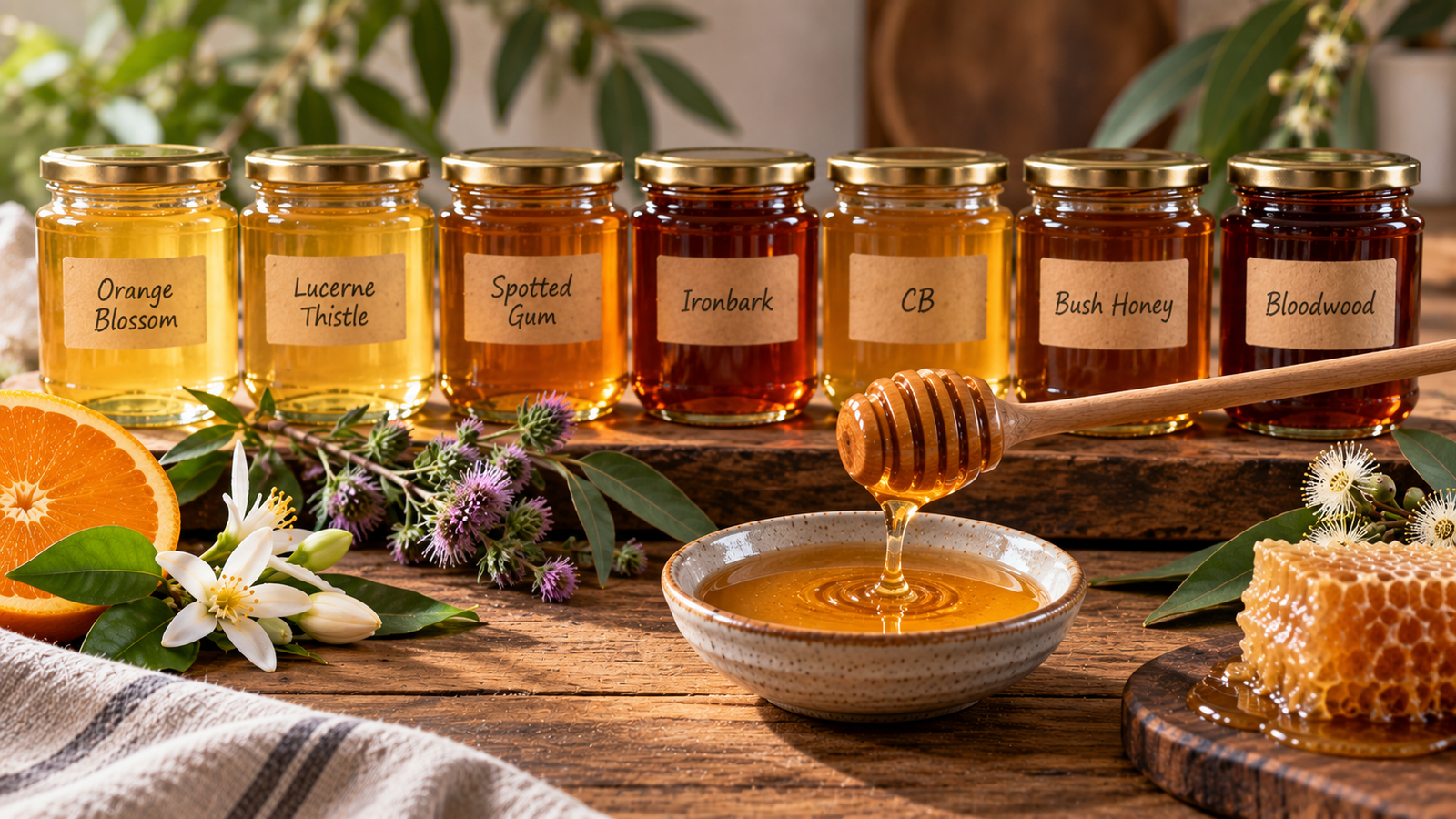
Orange Blossom, Ironbark, Spotted Gum and Bloodwood can all bring something different to a dish. I’ve started choosing honey in much the same way I’d choose a vinegar, soy sauce or other seasoning, based on what I think will work with the flavours I’m cooking.
If you’ve arrived here from one of my recipes because you don’t have the honey I’ve used, don’t worry. You can substitute it.
Substituting Honey
You don’t need to buy a particular honey just to make one of my recipes.
The easiest option is to use another honey you already have. The flavour may be a little different, but for most of my sauces, marinades, dressings and pickles, that’s perfectly fine.
If you don’t want to use honey at all, sugar works too. Rather than replacing every honey with white sugar, I like to choose a sugar that roughly suits the character I was trying to get from the original honey.
Intensity
Honey used in my recipe
Try another honey
Or try
Starting conversion
1 – Delicate
Orange Blossom
Light floral honey
White or caster sugar
1 tbsp → ~1½ tbsp
2 – Mild
Lucerne Thistle
Mild floral honey
Raw or cane sugar
1 tbsp → ~1½ tbsp
3 – Medium
CB
Mild-medium honey
Raw or cane sugar
1 tbsp → ~1½ tbsp
4 – Medium
Bush Honey
Everyday bush honey
Raw sugar
1 tbsp → ~1½ tbsp
5 – Medium-rich
Spotted Gum
Medium Australian bush honey
Raw or dark cane sugar
1 tbsp → ~1½ tbsp
6 – Robust
Ironbark
Rich, robust honey
Light brown sugar
1 tbsp → ~1½ tbsp
7 – Robust
Bloodwood
Strong Australian honey
Brown sugar
1 tbsp → ~1½ tbsp
*I’m still experimenting with CB and will update this recommendation as I use it more.
These aren’t exact flavour replacements. Think of them as starting points based on the role I wanted the honey to play in the dish.
If you only have white sugar, use it. I would much rather you make the recipe with what you have than go shopping for one ingredient.
Quick Conversion
For the sauces, marinades, dressings and pickling liquids you’ll find throughout Creacipes, a simple starting point is:
1 tablespoon honey → approximately 1½ tablespoons sugar
Then taste it.
You might want more or less depending on the dish, the honey I originally used and your own preference. Honey also contains water while granulated sugar doesn’t, so this conversion shouldn’t automatically be applied to baking, where changing the liquid balance can affect the result.
Honey Isn’t Just Sweet
When I first started substituting honey for sugar, I mostly thought of it as another way of adding sweetness.
The more varieties I’ve tried, the more I’ve realised how different they can be.
Depending on where the bees have been foraging, honey can be light and floral, fruity, woody, earthy, caramel-like or quite bold. Even honeys produced relatively close to each other can taste noticeably different.
That’s what made honey interesting to me as a cooking ingredient.
Instead of asking only:
How much sweetness does this recipe need?
I’ve started asking:
What kind of sweetness would make this taste better?
A delicate floral honey might work beautifully in a dressing or dipping sauce where I still want the other ingredients to come through.
Something richer might work better with grilled meat, soy sauce, fish sauce, garlic or a strongly flavoured marinade.
Sometimes the difference is subtle. Sometimes you can actually taste the character of the honey in the finished dish.
I’m still figuring that out.
Honeys I’ve Tried So Far
This isn’t intended to be a definitive honey guide. These are simply the honeys I’ve been cooking with and what I’m learning from using them.
I’ll keep updating this page as I try them in more recipes.
Orange Blossom
Orange Blossom was one of the honeys that really got me interested in experimenting with floral notes.
It’s lighter and more fragrant than some of the Australian bush honeys I’ve tried, so I like the idea of using it where its character has a chance to come through rather than burying it underneath very strong flavours.
I’m experimenting with it in: dressings, dipping sauces, pickles and lighter marinades.
If you don’t have it: try another light floral honey, or use white/caster sugar if you don’t want to use honey.
Spotted Gum
Spotted Gum has more depth than the lighter floral honeys I’ve tried and feels better suited to savoury cooking where there are stronger flavours competing with the sweetness.
I’m experimenting with it in: marinades, glazes and savoury sauces.
If you don’t have it: try a medium-flavoured bush honey or raw sugar.
Ironbark
Ironbark is one I’ve been reaching for when I want something richer and more robust.
Rather than disappearing into a strongly flavoured marinade, I find this kind of honey more interesting alongside ingredients such as soy, garlic and grilled meats.
I’m experimenting with it in: meat marinades, glazes, BBQ flavours and stronger sauces.
If you don’t have it: try another robust honey or light brown sugar.
CB
I’m still getting to know this one.
Rather than pretending I already know exactly where it belongs, I’m going to keep experimenting with it and update this section as I discover where I think it works best.
That’s really what this page is about.
Bush Honey
Bush honey can vary considerably depending on its source, which makes it difficult to give it one flavour description.
I tend to think of it as an everyday cooking honey. If I don’t specifically want the floral character of Orange Blossom or the stronger character of another honey, this is the sort of honey I can experiment with.
I’m experimenting with it in: everyday marinades, sauces, dressings and recipes where I would otherwise have used sugar.
If you don’t have it: use whatever honey you already have, or try raw or cane sugar.
Bloodwood
Bloodwood is another Australian honey I’m currently experimenting with.
It has enough character that I’m particularly interested in seeing how it performs with stronger savoury flavours rather than simply using it wherever I need sweetness.
I’m experimenting with it in: stronger marinades, meat glazes and savoury sauces.
If you don’t have it: try another robust honey or brown sugar.
Lucerne Thistle
This is another honey I’ve recently added to my collection and I’m still getting to know its flavour.
I’ll be experimenting with it in different recipes to see where its character works best, particularly compared with some of the other honeys I’ve been using.
I’m experimenting with it in: I’ll update this as I cook with it more.
If you don’t have it: another mild honey would be my starting point, or use sugar according to the substitution guide above.
Why I Like Cooking This Way
One of the things travelling changed about the way I cook was my idea that a particular dish has to be made from one exact list of ingredients.
I’ve seen similar dishes prepared in different countries and regions using the ingredients available locally. Those versions can be different from one another while still being completely normal and authentic to the people who grew up eating them.
That encouraged me to experiment more at home.
If I have a locally produced honey with a flavour I think will complement something I’m cooking, I’m happy to try it instead of automatically reaching for sugar.
Sometimes it works better. Sometimes the difference barely comes through. Occasionally I’ll decide the original ingredient was better.
That’s part of cooking.
An Ongoing Experiment
I’m not a honey expert, and I don’t want this page to pretend otherwise.
It’s a record of what I’m learning as I cook with different honeys.
As I try more varieties, I’ll add them here. As I use the same honey in more recipes, I’ll update my tasting notes and the dishes I think it works with. And if I change my mind about one after more experimenting, I’ll update that too.
So if you’ve come here simply because you need to substitute the honey in one of my recipes, use the table above and keep cooking.
But if you have the opportunity to try the honey I used, give it a go.
You might find, as I did, that honey can be a lot more interesting than just making something sweet.