
Fish sauce is probably one of the most important seasonings in my Vietnamese cooking.
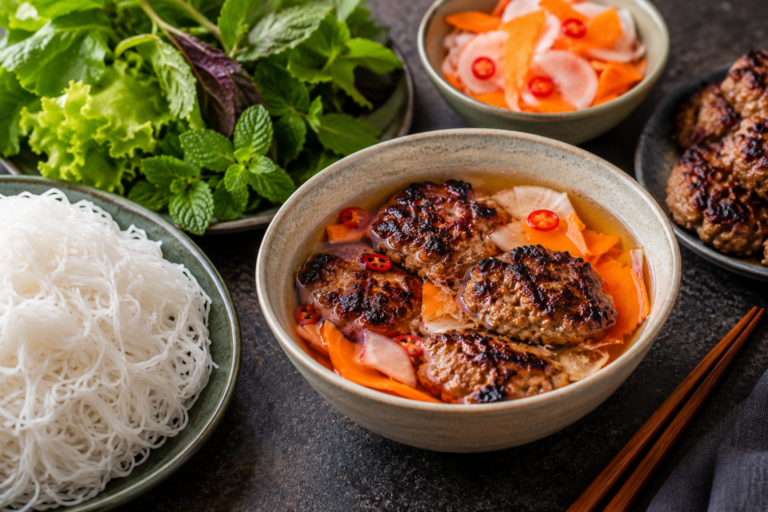
It’s in dipping sauces, salad dressings, marinades, Bún Chả and plenty of other dishes I make regularly.
Growing up around Vietnamese food, fish sauce was simply something that was always there. I didn’t spend much time thinking about why one bottle might taste different from another.
The more I’ve cooked, the more I’ve realised that fish sauce isn’t simply liquid salt.
A good fish sauce brings saltiness, but also umami, aroma, fermented flavour and a subtle natural sweetness of its own.
And just like soy sauce, changing the bottle can change the dish.
The Fish Sauce I Currently Use
At the moment, my main fish sauce is Squid Brand Gold Label Premium Fish Sauce.
Gold Label is Squid Brand’s premium first-press fish sauce. According to Squid Brand, it’s made from 80% anchovies and 20% salt, with no added sugar, MSG, preservatives or colours.
It’s naturally fermented rather than simply being a mixture of salty and savoury ingredients.
That’s something I’ve become more interested in as I’ve started paying more attention to what actually goes into the condiments I cook with.
For me, though, the most important test is still simple:
Does it make the food taste better?
That’s why this page will evolve as I try more fish sauces rather than becoming a page about one particular brand.
If You Don’t Have the Fish Sauce I Used
You absolutely don’t need Squid Brand Gold Label to make one of my recipes.
Use the fish sauce you have.
The important thing is understanding that different fish sauces can vary quite a lot in saltiness, intensity, aroma and umami.
If you’re using a different bottle from mine, particularly one you know is very salty or strong, I’d start with slightly less than the recipe calls for.
Then taste.
| If my recipe uses | What I’d do |
|---|---|
| Squid Brand Gold Label | Use the recipe quantity as written |
| Another premium fish sauce | Start around the same quantity and adjust to taste |
| A particularly strong or salty fish sauce | Start with less and add more gradually |
| A milder fish sauce | Use the recipe quantity, then add more if needed |
| No fish sauce | Choose a substitute based on the recipe rather than trying to find one universal replacement |
The last point is important.
There isn’t really one perfect substitute for fish sauce.
If it’s a marinade, soy sauce may provide some of the salt and umami.
If it’s a Vietnamese dipping sauce where fish sauce is the main flavour, replacing it with soy sauce creates a fundamentally different sauce.
That doesn’t necessarily mean it will taste bad.
It just won’t taste the same.
Fish Sauce Isn’t Just Salt
It’s easy to think of fish sauce as a way of making food salty.
If that were all it did, we could simply use salt.
Fish sauce gets much of its character from fermentation.
During fermentation, proteins in the fish break down into amino acids and other flavour compounds. These contribute to the deep savoury quality we describe as umami.
That’s why a relatively small amount of fish sauce can make an entire dish taste more savoury without necessarily making it taste obviously fishy.
The way I think about it now is:
Salt seasons the food.
Fish sauce seasons it and adds another layer of flavour.
How Fish Sauce Is Made
Traditional fish sauce is surprisingly simple.
At its core, you need:
Fish + salt + time.
Squid Brand says its fish sauces begin with fresh anchovies and sea salt before undergoing extended natural fermentation. The company says its general production process uses around 18 months of fermentation, while its current Gold Label material describes an even longer maturation for that premium product.
Over time, the fish proteins break down and the liquid develops its characteristic savoury aroma, amber colour and umami flavour.
The concept is simple.
Getting a good result isn’t.
The quality of the fish, ratio of salt, fermentation conditions, ageing and extraction all influence what eventually ends up in the bottle.
First Press Fish Sauce
This was something I became more interested in after using Gold Label.
The idea is somewhat similar to other fermented or extracted products where the first liquid drawn from the process can be particularly concentrated and prized.
Squid describes Gold Label as its first-press, premium-grade fish sauce.
That doesn’t automatically mean every recipe needs premium fish sauce.
If I’m adding a small amount to a strongly flavoured marinade with garlic, chilli, soy and other ingredients, some of those subtle differences may disappear.
But if fish sauce is one of the main flavours, I think the bottle becomes much more interesting.
That’s something I want to test more.
Where Fish Sauce Really Matters
I think about fish sauce differently depending on what I’m cooking.
Dipping Sauces
This is somewhere I’d reach for a fish sauce I really enjoy.
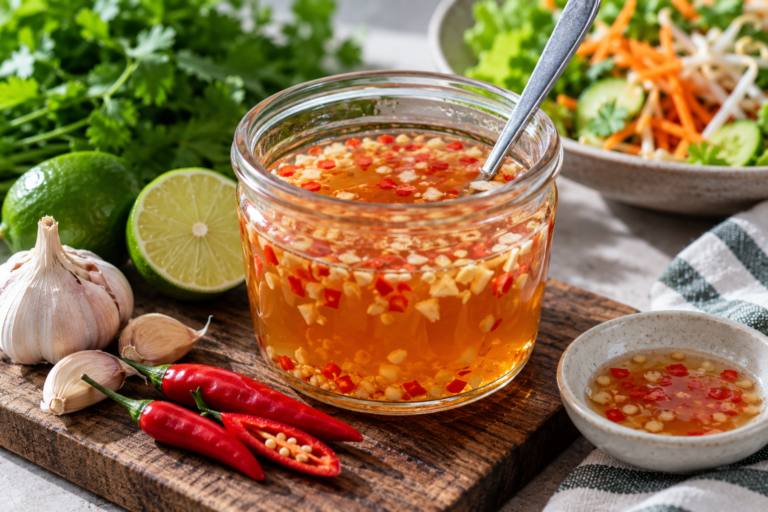
When the sauce is essentially fish sauce balanced with lime, sweetness, garlic, chilli and water, there’s nowhere for a poor fish sauce to hide.
The character of the bottle matters.
Vietnamese Salad Dressings
The same applies here.
A Vietnamese-style salad dressing can be incredibly simple:
fish sauce + lime + sweetness + garlic + chilli
When I experimented with adding sesame oil to one of my dressings, I found that the toasted sesame flavour overwhelmed the freshness I wanted.
I eventually removed it completely.
That reminded me that sometimes a dressing doesn’t need more ingredients.
It needs the right ingredients in the right balance.
Marinades
Fish sauce works differently for me in a marinade.
Here I’m usually using it as part of a larger flavour combination.
It might sit alongside:
garlic + lemongrass + honey + soy sauce + pepper
The fish sauce provides salt and umami while the other ingredients build around it.
Because there are so many competing flavours, I don’t necessarily need my most expensive fish sauce every time.
That’s something I’ll keep experimenting with.
Finishing
A small amount of good fish sauce can also be added towards the end of cooking when I want its savoury character to remain more noticeable.
Just be careful.
It’s much easier to add another splash than remove one.
Fish Sauce, Lime and Sweetness
This is probably one of the combinations you’ll see most often in my Vietnamese recipes.
Fish sauce gives saltiness and umami.
Lime gives acidity and freshness.
Sweetness balances both.
Garlic and chilli bring everything together.
The proportions change depending on what I’m making, but the basic relationship remains remarkably useful.
I’ve also increasingly been using honey instead of automatically reaching for white sugar.
That doesn’t mean honey is required.
Sugar works perfectly well and is traditional in plenty of preparations.
I simply enjoy experimenting with the additional flavours different honeys can bring.
Thai Fish Sauce in Vietnamese Food?
Squid Brand is a Thai fish sauce, while many of the recipes I use it in are Vietnamese.
That doesn’t bother me.
I don’t think a dish suddenly stops being Vietnamese because the fish sauce in my cupboard was produced across a national border.
Vietnam has its own enormous fish sauce tradition, and Vietnamese fish sauces can have their own characteristics.
I’ll explore those as I try more of them.
But Creacipes is a record of how I actually cook.
Right now, Squid Brand Gold Label is what I’m using, so that’s what you’ll see in my recipes.
Fish Sauce and Soy Sauce Are Not Interchangeable
Both are salty, fermented and full of umami.
That doesn’t make them the same ingredient.
Soy sauce brings fermented soybean and often wheat flavours.
Fish sauce brings fermented seafood flavours and a completely different aroma.
Sometimes I use both in the same recipe because they’re contributing different things.
Other times, particularly in Vietnamese dipping sauces and dressings, I want fish sauce specifically.
If you replace one with the other, you’re not necessarily ruining the recipe.
You’re changing it.
And sometimes that’s perfectly fine.
The Fish Sauces I Want to Explore
Gold Label is my starting point, not the end of this page.
I’d eventually like to compare:
- Different Squid Brand grades
- Vietnamese fish sauces
- Phú Quốc fish sauce
- First-press fish sauces
- Different anchovy concentrations
- Different fermentation periods
- Premium versus everyday cooking fish sauce
- Whether I can actually taste those differences once they’re cooked into a dish
That’s the part I’m most interested in.
There’s little point paying significantly more for an ingredient because the label tells me it’s better if I can’t tell the difference in the food.
On the other hand, if a better fish sauce noticeably improves something as simple as nước chấm, that’s worth knowing.
An Ongoing Experiment
This isn’t meant to be a definitive guide to fish sauce.
It’s a record of what I’m learning from cooking with it.
Squid Brand Gold Label is currently my reference point because that’s the bottle I’m actually using.
As I try Vietnamese fish sauces, different grades and other brands, I’ll add them here and compare where I think the differences matter.
Some might become better choices for dipping.
Some might be perfect for everyday marinades.
And I may discover that some of the differences I expected to matter don’t matter much at all.
That’s part of the experiment.
The goal isn’t to find the world’s “best” fish sauce.
It’s to understand what each one brings to the food and choose accordingly.
Cook with this ingredient
Try this ingredient in one of these recipes.

Questions or tips about this ingredient?